
The Kinguélé Aval project
From overview to operation, discover the Kinguélé Aval hydroelectric development.
Kinguélé Aval
-
2016-2021 Development The Kinguélé Aval project is the result of several years of studies and follows on from the Tchimbélé and Kinguélé dams.
-
2022-2026 Construction Construction was entrusted to an experienced contractor, Sinohydro Corporation, and mobilised over 900 people.
-
2027-2056 Operation Operation will be handled by local staff, trained under a five-year support contract with EDF France, and will employ more than 25 full-time people.
-
2057 Handover The development will be handed over turnkey to the State at the end of the 30th contractual year.
Technical description
The development is a run-of-river dam designed to optimise electricity generation while minimising its impact on the environment and biodiversity.
- 90 m³/s Design flow
- 100 yrs Design life of civil works
- +270,000 m³ Volume of concrete poured
- 10 / 225 kV HV connection substation
A site downstream of two existing plants
- Tchimbélé dam 63 MW
- Kinguélé dam 60 MW
- Kinguélé Aval dam 35 MW — under construction
Estuaire province · Buffer zone of the Monts de Cristal National Park
Construction monitoring
Works progress
- 2021 Works begin on site.
- 2024 Construction of the diversion channels — future bottom outlet —, phase II diversion and start of mass concrete pours.
- 2025 Delivery of the main civil works: concrete dam, embankment dam, powerhouse, stilling basin.
- 2026 Completion of most structures and installation of hydraulic and electromechanical equipment.
- 2027 Commissioning of the development.
How the site has evolved


The structures
The earth-concrete composite dam
Mindful of its ecological impact, the dam was designed as a composite structure — roughly one third embankment and two thirds concrete. This reduces the project’s carbon footprint by around 23% compared with an all-concrete solution. The structure is 47 metres high, 470 metres wide at the crest and uses more than 230,000 m³ of concrete.
The bottom outlet
During construction, two temporary diversion channels, each with a capacity of 100 m³/s, divert the river. At the end of the works, only one channel will be kept and integrated into the final structure as the bottom outlet, to manage the reservoir hydraulically and contribute to the dam’s operational safety.

The spillway
Designed to guarantee the safety of the development during major floods, it uses a PK Weir design, increasing discharge capacity while optimising the structure’s footprint. It can discharge up to 700 m³/s — equivalent to a 50-year return-period flood.

The penstocks
Three penstocks, over 3.5 metres in diameter, will carry water from the dam intake to each generating unit. Each penstock is made of nearly a hundred welded steel shells.

The powerhouse and units
The powerhouse will contain three generating units of more than 11 MW each, equipped with Francis turbines, along with the control rooms needed to operate the development.
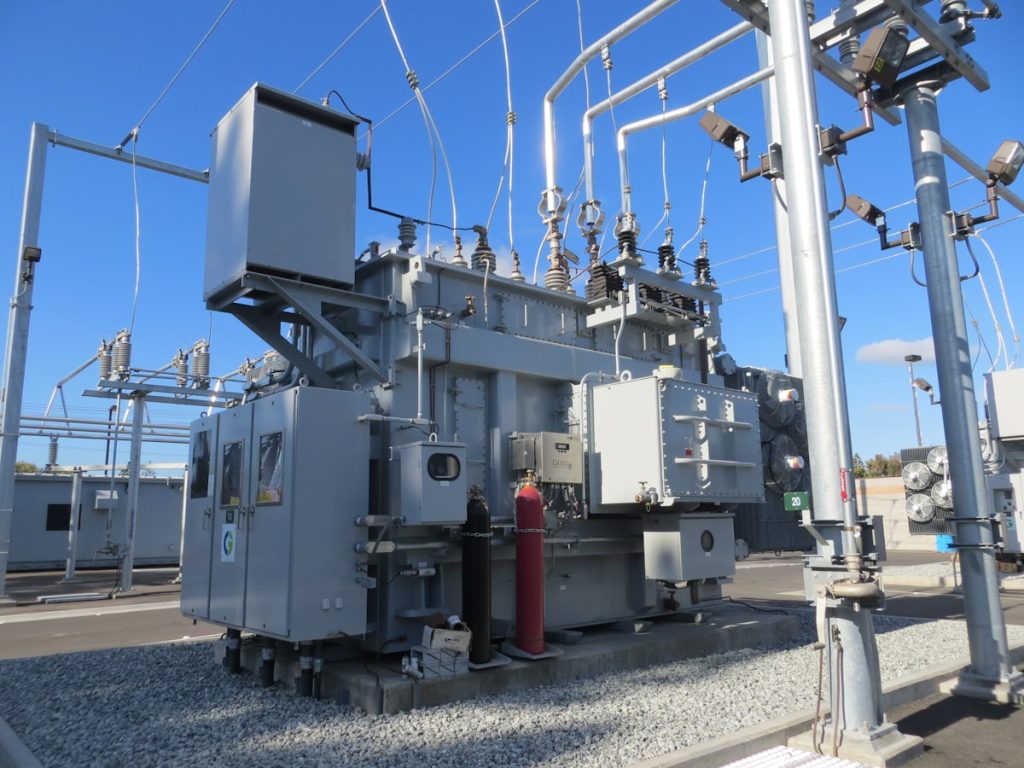
The HV substation
The high-voltage substation will export the electricity produced by the powerhouse to the Libreville Interconnected Grid.
Operating and maintaining the development for 30 years
After construction, Asonha Énergie will operate and maintain the development for 30 years, producing reliable, competitive renewable electricity for the Libreville Interconnected Grid.